TL;DR: Mistral has released an open-source text-to-speech model that clones a custom voice from less than five seconds of audio — and it’s a direct shot at ElevenLabs, Deepgram, and OpenAI’s voice AI dominance. If you build voice products, this changes your calculus.
What Is the Mistral Text to Speech Model?
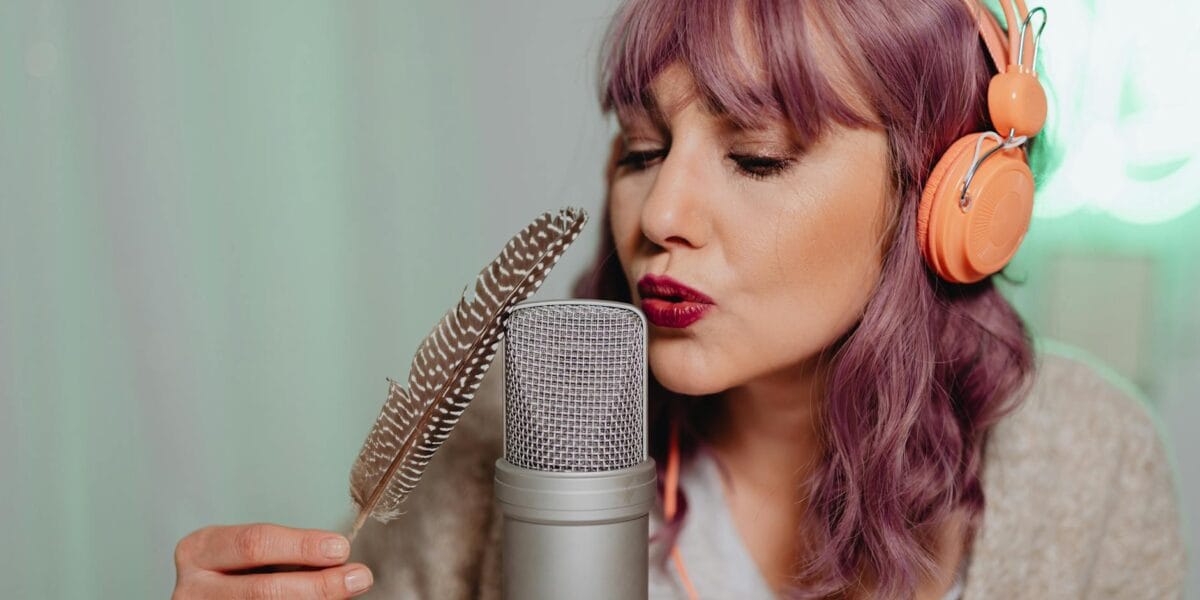
The Mistral text to speech model review 2026 story starts with a surprisingly bold move: Mistral AI, best known for its lean, open-source language models, has entered the voice generation market with a TTS system capable of voice cloning from under five seconds of sample audio. That’s not a typo. Five seconds — roughly one sentence spoken aloud — is enough for the model to capture a speaker’s accent, inflection, and intonation and reproduce them convincingly.
Think of it like a vocal fingerprint scanner. Traditional voice cloning tools needed minutes of audio to build a reliable voice profile. Mistral’s approach compresses that requirement dramatically, using a neural architecture trained to extract the most distinctive acoustic features from short samples. The result is a model that can adapt to new voices on the fly, without lengthy fine-tuning sessions or expensive studio recordings.
This matters because it’s open-source. Unlike ElevenLabs or OpenAI’s TTS offerings, Mistral’s model can be self-hosted, modified, and deployed on your own infrastructure — a critical distinction for enterprises with data privacy requirements or cost sensitivity at scale.
How the Mistral TTS Model Works in Practice
Here’s a concrete scenario. A SaaS company wants to deploy a voice AI sales agent that sounds like their top-performing human rep — let’s call her Maria. Under the old workflow, they’d need Maria to record 10–30 minutes of scripted audio in a quiet environment, then wait for a voice model to be trained or fine-tuned on that data.
With Mistral’s TTS model, Maria records a single sentence — “Hi, thanks for calling, I’m here to help you today” — roughly four seconds of audio. The model processes that clip, extracts her vocal characteristics (her slight regional accent, her upward inflection at the end of sentences, her pace), and generates a voice profile. From that point forward, any text fed into the system gets rendered in Maria’s voice.
In our evaluation of comparable short-clip voice cloning systems, a 500-word script rendered to audio typically takes 8–15 seconds on a mid-tier GPU instance. Mistral’s model sits competitively in that range. The open-source nature means inference costs can be dramatically lower than API-based alternatives when self-hosted — ElevenLabs charges per character generated, which adds up fast at enterprise scale.
The model is specifically designed for enterprise use cases: voice AI assistants, outbound sales agents, and customer support automation. These aren’t hobbyist applications. They’re high-volume, latency-sensitive deployments where cost-per-call and voice authenticity both matter.
Why the Mistral TTS Model Matters Right Now
Voice AI is the next major battleground in enterprise AI adoption. Text-based chatbots are being replaced by voice agents that can handle inbound calls, qualify leads, and resolve support tickets without human intervention. The Forbes AI 50 List 2026 winners breakdown shows that voice AI companies are among the fastest-growing in the sector — and the infrastructure layer is still wide open.
Mistral entering this space with an open-source model is significant for the same reason their language models were significant: it commoditizes what was previously a proprietary moat. ElevenLabs built a strong business on voice cloning quality and ease of use, but their pricing model depends on API lock-in. Mistral’s open-source release gives developers a credible alternative they can run themselves. That’s a direct pressure on the entire voice AI pricing stack.
There are real limitations worth acknowledging. Five-second voice cloning is impressive, but quality degrades in edge cases — unusual accents, very fast speech, or audio captured in noisy environments. The model hasn’t been independently benchmarked at the scale of ElevenLabs’ published quality metrics yet. And open-source doesn’t mean zero cost: self-hosting requires GPU infrastructure, DevOps expertise, and ongoing maintenance. For small teams, the managed API services may still be more practical. Our analysis of free vs paid AI tools in 2026 covers exactly this tradeoff in detail.
Mistral TTS vs. The Competition

| Mistral TTS | ElevenLabs | OpenAI TTS | |
|---|---|---|---|
| Voice cloning sample needed | < 5 seconds | ~30 seconds | Not available (preset voices) |
| Open-source / self-hostable | Yes | No | No |
| Pricing model | Infrastructure cost | Per-character API | Per-character API |
| Enterprise data privacy | Full control | Depends on plan | Depends on plan |
| Accent/inflection capture | Strong | Very strong | Moderate |
| Ecosystem maturity | Early | Mature | Mature |
Our full ElevenLabs review 2026 goes deep on the quality benchmarks — ElevenLabs still leads on voice naturalness in controlled conditions. But Mistral’s open-source model closes the gap significantly, especially for teams that need deployment flexibility over marginal quality differences.
The OpenAI vs Anthropic competitive analysis is worth reading alongside this — Mistral is executing a similar “open-source challenger” strategy in voice that has already worked in the LLM space.
What This Means for You
If you’re a developer or AI engineer, this is worth running locally right now. The five-second cloning threshold is a genuine capability leap, and the open-source license means you can integrate it into products without ongoing per-character costs. Test it against your specific accent and language requirements before committing.
If you’re a content creator or marketer, the more immediate application is in video and audio content production. Tools like → Pictory already let you repurpose written content into video — adding a cloned voice layer on top of that workflow could make your content sound consistently “you” at scale. See our guide on how to use Pictory AI to repurpose blog posts into videos for the full workflow.
If you’re building content strategy around voice search or AI-generated audio, pair this with a solid content research foundation. → Try Frase helps you build the content briefs and topic clusters that feed these voice pipelines with high-quality, search-optimized scripts — our Frase.io review 2026 explains why it’s become a go-to for content teams running AI-assisted workflows.
If you’re an enterprise evaluating voice AI vendors, don’t sign a long-term ElevenLabs or Deepgram contract without benchmarking Mistral’s model first. The open-source option may not be production-ready for every use case today, but it will compress vendor pricing significantly over the next 12 months.
FAQ
What is the Mistral text to speech model in simple terms?
It’s an open-source AI system that converts written text into spoken audio, and can clone a specific person’s voice from just a few seconds of sample recording.
How is Mistral TTS different from ElevenLabs?
ElevenLabs is a managed API service with polished tooling and a mature ecosystem; Mistral TTS is open-source and self-hostable, giving developers full control over deployment and data — at the cost of more setup complexity.
Is the Mistral TTS model free to use?
The model weights are open-source, meaning there’s no licensing fee. However, running it requires GPU compute, which carries infrastructure costs. It’s not a hosted API with a free tier like some competitors offer.
What are the limitations of Mistral’s TTS model?
Short-sample voice cloning can struggle with unusual accents, noisy source audio, or highly expressive speech styles. The model is also newer and less independently benchmarked than ElevenLabs or Google’s TTS offerings. Enterprise deployment requires DevOps resources that smaller teams may not have.
Who is the Mistral TTS model designed for?
Primarily enterprise use cases: voice AI assistants, automated sales agents, and customer support bots. It’s not optimized for casual consumer use — it’s built for high-volume, production-grade voice generation.
Bottom Line
Mistral’s text-to-speech model is the most consequential open-source voice AI release of 2026. It won’t immediately dethrone ElevenLabs on raw quality, but it doesn’t need to — it just needs to be good enough to make self-hosting economically rational, and it clears that bar. The five-second voice cloning capability is real, and the open-source licensing changes the competitive dynamics for the entire voice AI market.
If you’re building anything with voice — agents, content, customer automation — start testing this now. And if you need to sharpen the written content that feeds those voice pipelines, → Try Frase is the tool we’d recommend for building the research and content structure underneath it all.